Spider plant care: easy growing and more plantlets
Short answer
Spider plants grow easily in medium to bright, indirect light. Water thoroughly when the top 1–2 inches of soil are dry; their thick, fleshy roots store water, so they forgive missed waterings. Use a well-draining potting mix, feed only every 3–4 months, and repot when the roots crowd the pot. They’re non-toxic to cats and dogs.[1, 3, 4]
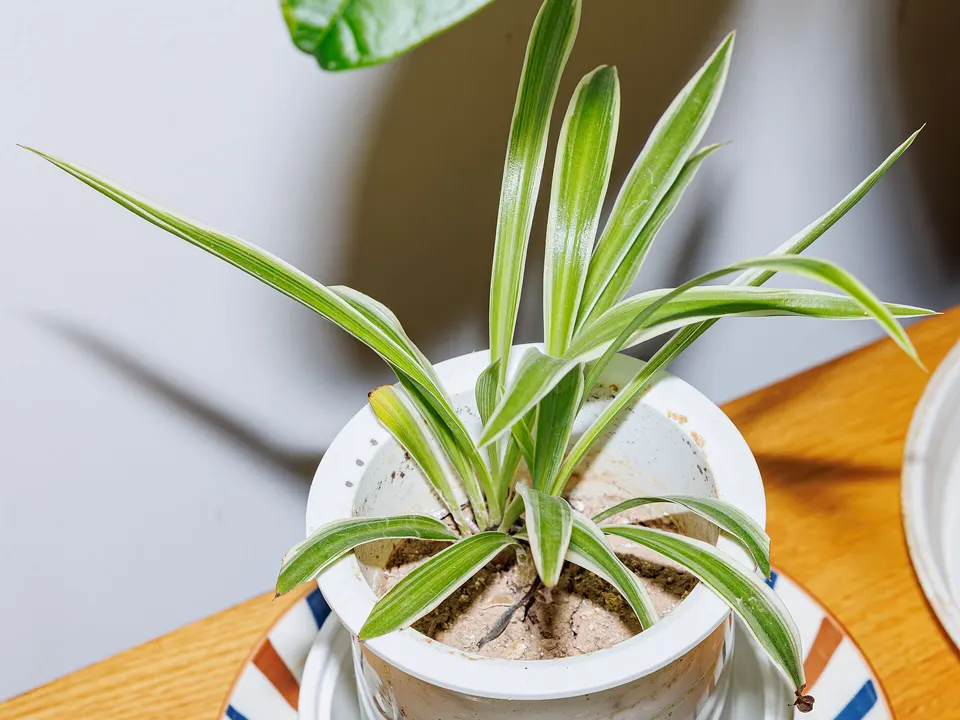
Spider plant care at a glance
| Light | Medium to bright, indirect light |
|---|---|
| Watering | Thoroughly, when the top 1–2 inches are dry |
| Soil and pots | General-purpose, well-draining mix |
| Humidity | Average humidity is fine |
| Temperature | Cool to average room temperatures |
| Feeding | Every 3–4 months is enough |
| Repotting | Often, as the roots fill the pot |
| Propagation | Root the plantlets (“babies”) |
| Plantlets, flowers and size | 12–15 inches tall; runners up to 2 feet |
| Pets | No: non-toxic to cats and dogs |
Light
- It grows easily in medium to bright, indirect light all year. [1, 2, 3]
- Outdoors, full sun can sunburn it. [1]
Watering
- Water deeply and thoroughly when the top 1–2 inches of soil feel dry. [1, 2, 3]
- Its thick, fleshy roots store water, so it survives irregular watering. [1]
- Overwatering, or soil that drains poorly, leads to root rot. [1, 3]
Soil and pots
- Use a general-purpose potting soil or soilless mix that drains well. [1, 2, 3]
- Adding perlite to bagged potting soil improves drainage. [3]
Humidity
- It does well with average humidity. [1]
- Very low humidity is one cause of brown leaf tips. [1]
Temperature
- Cool to average room temperatures suit it, though it tolerates warmer conditions. [1]
Feeding
- Feeding every 3–4 months is usually enough, or feed more often at half strength. [1]
- Heavily fed plants make fewer plantlets, and too much fertilizer browns the leaf tips. [1]
Repotting
- Roots quickly crowd the pot, so it needs frequent repotting to do its best. [1]
- It does produce the most plantlets when slightly pot-bound. [1, 2]
Propagation
- Plant the plantlets (the “spiders”) in mix while they’re still attached, and cut the runner once they’ve rooted. [1]
- Clipping and potting up the babies also takes stress off the mother plant. [3]
- Plants grown from seed may not have the same leaf coloring as the parent. [1]
Plantlets, flowers and size
- It grows 12–15 inches tall, with arching leaves 1–2 feet long and wiry flower stems up to 2 feet. [1, 2]
- Flowers and plantlets form after short days and long, uninterrupted nights for at least three weeks; indoors they can appear any time. [1]
- It makes plantlets most readily when pot-bound. [1, 2]
Is a spider plant toxic to pets?
- The ASPCA lists spider plant as non-toxic to dogs and cats. [4]
- Cats eating a lot of it can vomit or get diarrhea, and some show mild hallucinogenic effects. Hanging it out of reach helps. [3]
Compare with other plants in our pet-safe houseplant checker.
Spider plant varieties
| Variety | What it looks like |
|---|---|
| 'Vittatum' | Dark green leaves with a wide, creamy white center stripe. Grows more slowly than green types. [1] |
| 'Variegatum' | Broader green leaves with white edges. Makes fewer plantlets than other types. [1] |
| 'Milky Way' | Green edges with a broad white to cream center. [1] |
| 'White Stripe' | A narrow white to cream line down the center vein, fading with age. [1] |
| Curly 'Bonnie' | Leaves that curl. [3] |
Common spider plant problems
| What you see | Usual cause |
|---|---|
| Brown leaf tips | Low humidity, very dry soil, salt buildup, fluoride or chlorine in tap water, or too much fertilizer. Distilled water or rainwater helps. [1] |
| Few or no plantlets | Heavy feeding, or roots that aren’t yet pot-bound. [1, 2] |
| Root rot | Overwatering or poorly drained soil. [1, 3] |
| Sunburned leaves | Full sun outdoors. [1] |
| Pests | Few problems besides scale insects and mealybugs. [1] |
Not sure what's wrong? Use the plant doctor to match what you see to a cause.
Questions people ask
Why are my spider plant’s tips turning brown?
Common causes are low humidity, soil drying out too much, salt buildup, fluoride or chlorine in tap water, and too much fertilizer. Watering with distilled water or rainwater helps. [1]
Is a spider plant safe for cats?
The ASPCA lists it as non-toxic to cats and dogs, but cats that eat a lot may vomit or get diarrhea. Hanging it out of reach helps. [3, 4]
How do I propagate spider plant babies?
Set a plantlet in potting mix while it’s still attached to the mother plant, then cut the runner once it has rooted. [1]
When should I repot a spider plant?
When the roots crowd the pot, which happens quickly. Keep it slightly pot-bound if you want plenty of plantlets. [1, 2]
How much light does a spider plant need?
Medium to bright, indirect light. It adapts to medium light but grows best in bright light, out of full sun. [1, 2, 3]
Sources
Facts on this page were checked against these sources on November 6, 2026. The wording is our own.
- Spider plant, Chlorophytum comosum. University of Wisconsin–Madison Division of Extension, Wisconsin Horticulture. Revised Jan 6, 2025.
- Spider Plant. University of Illinois Extension, Houseplants.
- Exciting Houseplant Selections for Beginners. Clemson Cooperative Extension, Home & Garden Information Center. Jul 28, 2025.
- Toxic and Non-Toxic Plants: Spider Plant. ASPCA Animal Poison Control Center.
Spotted a mistake? Report an error and we'll check it against the sources and update the page.