Peperomia care: how to grow these compact houseplants
Short answer
Give peperomia bright, indirect light from an east- or south-facing window, and let the soil dry out between waterings: many have thick, fleshy leaves like succulents, and overwatering makes them drop leaves. Use a well-drained houseplant or cactus mix, feed only in spring and summer, and repot just every few years. Most peperomia are considered safe for pets.[1]
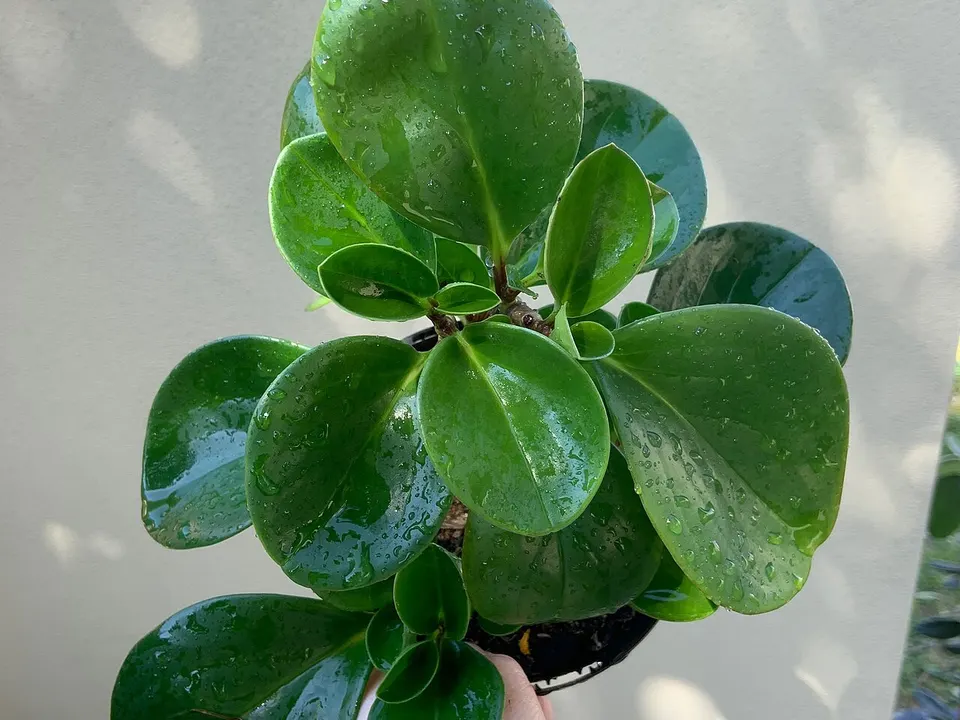
Peperomia care at a glance
| Light | Bright, indirect light; no direct sun |
|---|---|
| Watering | Let the soil dry out between waterings |
| Soil and pots | Well-drained houseplant or cactus mix |
| Humidity | A humidifier helps in winter |
| Temperature | Outdoors only once nights stay above 60 °F |
| Feeding | Only in spring and summer |
| Repotting | Every few years, into a slightly larger pot |
| Pruning | Pinch for a fuller plant |
| Propagation | Stem, leaf or water cuttings |
| Size and growth | 8–15 inches, moderate growth |
| Pets | Most are considered pet-safe |
Light
- Give it indirect light from an east- or south-facing window. [1]
- It tolerates somewhat low light near a large north-facing window. [1]
- In direct sun the leaves may scorch. [1]
Watering
- Let the soil dry out between waterings. Many peperomia have thick, fleshy leaves like succulents. [1]
- An overwatered plant drops its leaves. [1]
- Water, let the pot drain, then put it back in its saucer. [1]
- Keep water off the leaves to prevent fungal leaf spots. [1]
Soil and pots
- Plant it in a well-drained houseplant or cactus potting mix. [1]
Humidity
- It benefits from a humidifier in winter. [1]
Temperature
- If you move it outdoors for summer, wait until nights are consistently 60 °F or warmer, which is typically May. [1]
Feeding
- Feed only while it’s actively growing in spring and summer. [1]
- Use a low-strength liquid fertilizer now and then, or a slow-release granular fertilizer once a year. [1]
Repotting
- It doesn’t need repotting every year and can stay in the same pot for several years. [1]
- When you do repot, use a pot only slightly larger than the current one. [1]
Pruning
- Trim off old leaves as needed. [1]
- For a fuller plant, cut a stem just above a leaf node so it branches. [1]
- Its flower spikes are often said to look like a rat’s tail; removing them lets the plant put its energy into leaves. [1]
Propagation
- Stem cuttings: cut a 3–5 inch piece, remove the lower leaves, dip it in rooting hormone and insert it in potting mix. Cover with clear plastic and keep it out of direct sun. [1]
- Leaf cuttings: take a leaf with at least an inch of its stalk (petiole); new plants form at the base. [1]
- Some, like the baby rubber plant, root in water from 4–6 inch cuttings. [1]
Size and growth
- Most peperomia grow 8–15 inches tall and wide, at a moderate rate. [1]
Is peperomia toxic to pets?
- Most peperomia are considered safe for pets. [1]
- The ASPCA lists the baby rubber plant (Peperomia obtusifolia) and watermelon peperomia (Peperomia argyreia) as non-toxic to dogs and cats. [2, 3]
Compare with other plants in our pet-safe houseplant checker.
Peperomia varieties
| Variety | What it looks like |
|---|---|
| Watermelon peperomia (P. argyreia) | Striped leaves like a watermelon rind; about 8 inches tall. [1, 3] |
| Baby rubber plant (P. obtusifolia) | Rounded, thick, succulent-like leaves, solid green or variegated. [1, 2] |
| Ripple plant (P. caperata) | Rippled, wrinkled leaves; some are burgundy-red, others green with silver. About 10 inches. [1] |
| Red-edged peperomia (P. clusiifolia) | Dark green leaves edged in red, up to 12 inches; 'Ginny' is green and cream with a pink edge. [1] |
| Raindrop plant (P. polybotrya) | Shiny, teardrop-shaped green leaves; about 12 inches tall and wide. [1] |
| String of turtles (P. prostrata) | Tiny round leaves patterned like a turtle shell. Very sensitive to overwatering. [1] |
| Beetle peperomia (P. quadrangularis) | A slow-growing trailer with fleshy, striped leaves. [1] |
| Cupid peperomia (P. serpens) | A vining plant with heart-shaped leaves, much like a philodendron. [1] |
Common peperomia problems
| What you see | Usual cause |
|---|---|
| Dropping leaves | Overwatering. [1] |
| Root rot | Overwatering: the most common peperomia disease. [1] |
| Spots on the leaves | Fungal leaf spot. Keep the leaves dry when you water. [1] |
| Scorched leaves | Direct sun. [1] |
| Pests | Mealybugs, spider mites, fungus gnats, scale and whiteflies. [1] |
Not sure what's wrong? Use the plant doctor to match what you see to a cause.
Questions people ask
Is peperomia safe for cats and dogs?
Most peperomia are considered pet-safe, and the ASPCA lists the baby rubber plant and watermelon peperomia as non-toxic to dogs and cats. [1, 2, 3]
How often should I water peperomia?
Only once the soil has dried out. Many peperomia store water in thick leaves, and overwatering makes them drop leaves and can cause root rot. [1]
How do I care for a watermelon peperomia?
Like other peperomia: bright, indirect light, soil that dries between waterings, a well-drained mix and light feeding in spring and summer. It stays about 8 inches tall. [1]
How do I propagate peperomia?
Root a 3–5 inch stem cutting in potting mix, or plant a leaf with at least an inch of its stalk; some kinds also root in water. [1]
Should I remove peperomia flower spikes?
You can. They’re often thought unattractive, and removing them lets the plant put its energy into leaves. [1]
Sources
Facts on this page were checked against these sources on November 6, 2026. The wording is our own.
- Peperomia (Peperomia spp.) Indoor Plant Care and Growing Guide (HGIC 1567). Clemson Cooperative Extension, Home & Garden Information Center. Published Jan 15, 2026.
- Toxic and Non-Toxic Plants: Baby Rubber Plant. ASPCA Animal Poison Control Center.
- Toxic and Non-Toxic Plants: Watermelon Peperomia. ASPCA Animal Poison Control Center.
Spotted a mistake? Report an error and we'll check it against the sources and update the page.