Prayer plant care: light, soil, humidity and repotting
Short answer
Prayer plants grow best in bright, indirect light, out of direct sun, which bleaches their colors. Keep regular potting mix evenly moist in the growing season, letting it dry a little in winter, and give them warmth and high humidity. Keep cold drafts away, feed lightly, and repot in spring or early summer. The ASPCA lists prayer plants as non-toxic to cats and dogs.[1, 2, 3, 4]
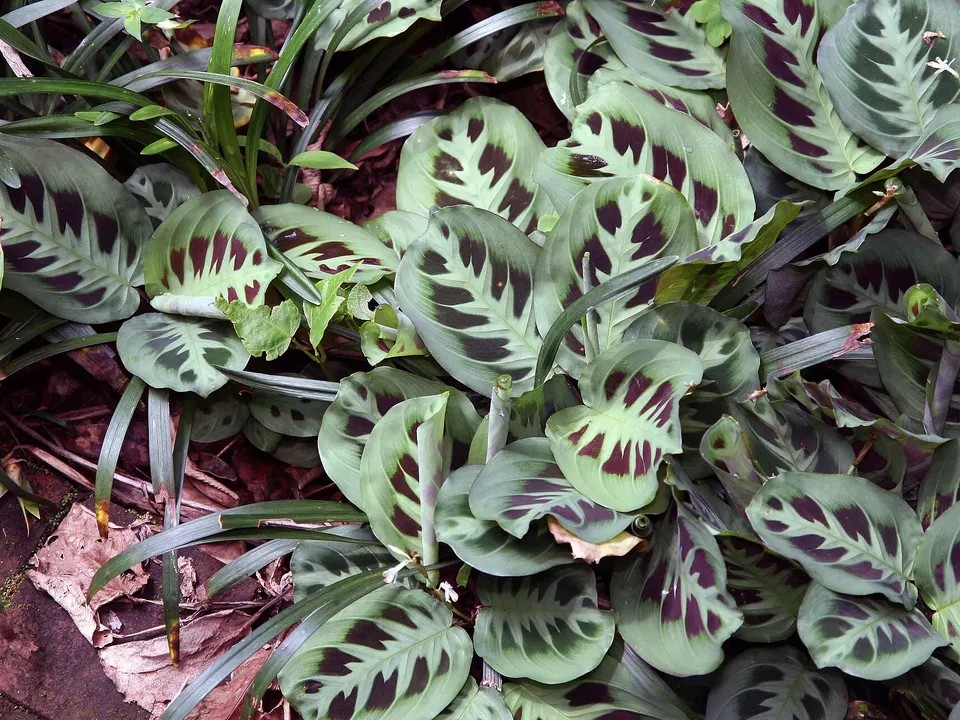
Prayer plant care at a glance
| Light | Bright, indirect light; no direct sun |
|---|---|
| Watering | Evenly moist; a little drier in winter |
| Soil for a prayer plant | Regular potting mix that drains well |
| Humidity | High humidity |
| Temperature | Warm; no cold drafts |
| Feeding | Lightly: too much burns the leaves |
| Repotting | Spring or early summer, when root-bound |
| Propagation | Divide the clump |
| Why the leaves “pray” | Leaves fold up at night |
| Pets | Non-toxic to cats, dogs and horses |
Light
- Give it bright, indirect or diffused light indoors. It tolerates low to medium light. [1, 2]
- Keep it out of direct sun: too much sun bleaches the leaf colors. [1]
- In low light, the colors fade. [1]
Watering
- Keep the soil evenly moist through the growing season. [1, 2]
- In winter, water less and let the soil dry between waterings. [1, 2]
- Don’t let water stand on the crown: the stems rot easily. [2]
Soil for a prayer plant
- Plant it in regular potting mix. [2]
- Make sure it drains well: roots can rot in poorly drained soil. [1]
Humidity
- It needs high humidity and does poorly in dry air. [1, 2]
- Raise the humidity with a room humidifier, or stand the pot on a tray of wet pebbles. [1]
Temperature
- It likes warm temperatures. [2]
- It doesn’t tolerate low temperatures or cold drafts. [1]
Feeding
- Feed lightly. Too much fertilizer burns the leaves, while too little makes the colors fade. [1]
- High fluoride levels burn the leaves too. [1]
Repotting
- Signs it needs repotting: roots coming out of the drainage holes or across the soil surface, a pot full of roots, smaller new leaves, or wilting between normal waterings. [3]
- Repot while it is actively growing, typically in spring or early summer. [3]
- Ease it out of the pot, untangle or trim circling roots, and replant at the same depth in fresh potting mix. Firm the soil gently and water right away. [3]
Propagation
- Propagate by dividing the clump at its rhizomes (creeping underground stems). [1]
Why the leaves “pray”
- By day the leaves lie flat; at night they rise and fold upright into the “prayer” position. That is normal, not a problem. [1, 2]
- It grows 6–12 inches tall and up to 2 feet wide, spreading sideways from short, creeping stems. [1]
Is a prayer plant safe for cats and dogs?
- The ASPCA lists the prayer plant (including the names Maranta and red veined prayer) as non-toxic to dogs, cats and horses. [4]
Compare with other plants in our pet-safe houseplant checker.
Prayer plant varieties
| Variety | What it looks like |
|---|---|
| Red-veined prayer plant | Red, fishbone-patterned veins and a pale center on each leaf; often called red prayer plant. [1] |
| 'Fascinator Tricolor' | Dark green leaves with light green edges, red ribs and veins, and a yellow center. [1] |
| 'Lemon' (lemon lime prayer plant) | Dark green leaves with a yellowish-green center and stripes. [1] |
| 'Silver Band' | Dark green leaves with a broad silver-green center patch. [1] |
Common prayer plant problems
| What you see | Usual cause |
|---|---|
| Faded or bleached leaf colors | Too much sun (bleached), or too little light or fertilizer (faded). [1] |
| Burned leaf edges or tips | Too much fertilizer, or fluoride in the water. [1] |
| Rotting stems or roots | Water left on the crown, or soil that drains poorly. [1, 2] |
| Fine speckles or white cottony clumps | Spider mites or mealybugs, occasionally. [1] |
Not sure what's wrong? Use the plant doctor to match what you see to a cause.
Questions people ask
What is a red prayer plant?
The red-veined prayer plant is the common Maranta leuconeura with bright red, fishbone-patterned veins. It gets the same care as any prayer plant: bright, indirect light, even moisture and high humidity. [1]
What soil is best for a prayer plant?
A regular potting mix that drains well. Keep it evenly moist in the growing season, but never soggy: roots rot in poorly drained soil. [1, 2]
Why does my prayer plant close its leaves at night?
That is what gives it its name. The leaves lie flat by day and rise and fold up at night. It is normal. [1, 2]
Is a prayer plant safe for cats?
Yes. The ASPCA lists prayer plants as non-toxic to cats, dogs and horses. [4]
Sources
Facts on this page were checked against these sources on November 10, 2026. The wording is our own.
- Maranta leuconeura (Prayer Plant). NC State Extension, Gardener Plant Toolbox.
- Prayer Plant. University of Illinois Extension, Houseplants.
- Repotting. University of Illinois Extension, Houseplants.
- Toxic and Non-Toxic Plants: Prayer Plant. ASPCA Animal Poison Control Center.
Spotted a mistake? Report an error and we'll check it against the sources and update the page.