Lucky bamboo care: growing it in water or soil
Short answer
Lucky bamboo (Dracaena sanderiana) isn’t a true bamboo. Give it bright, indirect light; direct sun browns the leaves. In water, keep the roots and at least an inch of stem covered and change the water weekly; in soil, water when the top inch is dry. Feed it lightly, keep it warm, and keep it away from pets: it’s toxic to them.[1, 2]
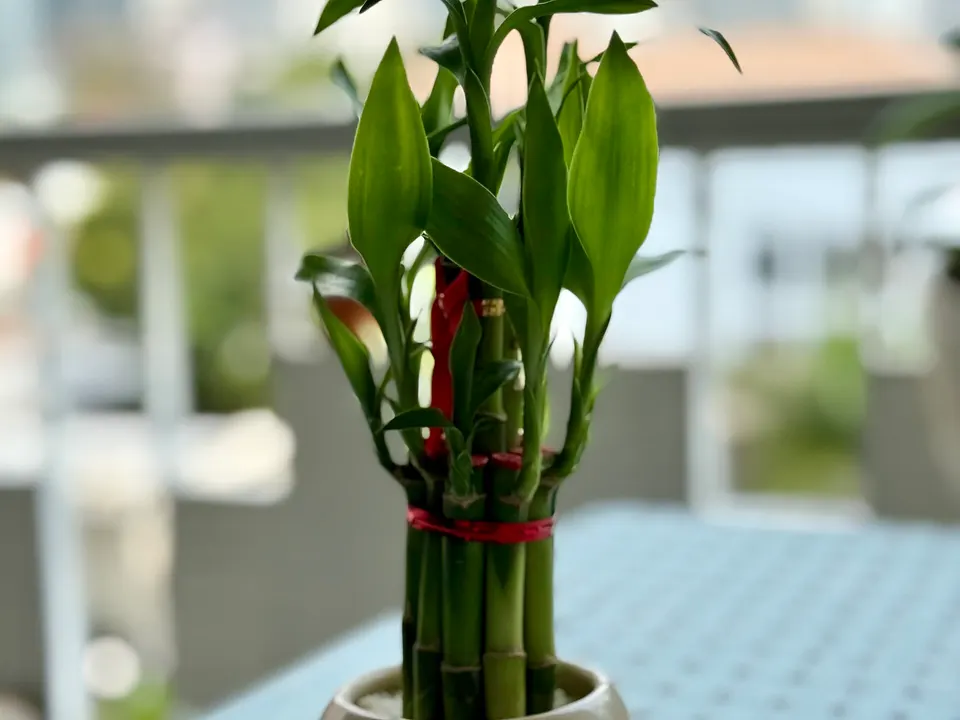
Lucky bamboo care at a glance
| Light | Bright, indirect light; no direct sun |
|---|---|
| Growing in water | Cover the roots; change the water weekly |
| Growing in soil | Well-drained mix; water when the top inch is dry |
| Feeding | Lightly: every other month in water, monthly in soil |
| Temperature | Warm; indoors once nights drop below 65 °F |
| Propagation | Root a new shoot in water |
| Not a true bamboo | A tropical dracaena with fleshy stems |
| Pets | Yes: toxic to pets; can irritate skin |
Light
- Keep it in a room with bright, indirect light, such as one facing east or north. [1]
- Direct sun damages the leaves and turns them brown. [1]
Growing in water
- Keep enough water in the container to cover the roots and at least an inch of stem. [1]
- Pebbles or marbles in the bottom of the container help hold the stalks upright. [1]
- Change the water every week. [1]
Growing in soil
- Use a well-drained potting soil labeled for indoor or tropical plants. [1]
- Water when the top inch of soil is dry, let it drain thoroughly, and don’t leave water in the saucer. [1]
- Stake tall stems until the roots anchor in the soil. [1]
Feeding
- In water: a liquid houseplant fertilizer at a quarter of the label rate, every other month. [1]
- In soil: a houseplant fertilizer once a month during the growing season. [1]
Temperature
- It survives outdoors year-round only in USDA zones 10–12. [1, 2]
- It can summer outdoors in shade after the danger of frost has passed, but bring it back in before nights drop below 65 °F. [1]
Propagation
- Cut a shoot of new growth from the main stem, remove its lowest leaves and stand it in water. [1]
- New roots usually form within 2–3 weeks. [1]
Not a true bamboo
- Despite its name it isn’t a true bamboo but a tropical plant, a species of dracaena. [1, 2]
- Its stems are jointed but fleshy, and it grows far more slowly and shorter than real bamboo. [2]
Is lucky bamboo toxic to pets?
- It is toxic to pets and can cause skin irritation in people. [1]
Compare with other plants in our pet-safe houseplant checker.
Common lucky bamboo problems
| What you see | Usual cause |
|---|---|
| Brown leaves | Direct sun. [1] |
| Pests | Spider mites, mealybugs and aphids. Remove them by hand, rinse the leaves, or use neem oil or insecticidal soap. [1] |
Not sure what's wrong? Use the plant doctor to match what you see to a cause.
Questions people ask
Is lucky bamboo really bamboo?
No. It’s a tropical plant, a species of dracaena, with fleshy, jointed stems, and it grows much more slowly than true bamboo. [1, 2]
How often should I change lucky bamboo water?
Every week. Keep the roots and at least an inch of stem underwater. [1]
Can lucky bamboo grow in soil?
Yes. Use a well-drained potting soil for indoor or tropical plants and water when the top inch is dry. [1]
Is lucky bamboo toxic to cats and dogs?
Yes. Clemson Extension notes it is toxic to pets and can irritate human skin, so keep it out of reach. [1]
How do I propagate lucky bamboo?
Cut off a new shoot, remove the lowest leaves and stand it in water. Roots usually appear in 2–3 weeks. [1]
Sources
Facts on this page were checked against these sources on November 6, 2026. The wording is our own.
- How To Grow and Care for Lucky Bamboo (Dracaena Sanderiana). Clemson Cooperative Extension, Home & Garden Information Center. Feb 2, 2026.
- Containing and Removing Bamboo. University of Maryland Extension. Updated Nov 3, 2026.
Spotted a mistake? Report an error and we'll check it against the sources and update the page.