Dracaena care: corn plant, dragon tree and other types
Short answer
Most dracaenas grow best in bright, indirect light but tolerate lower light. Water when the soil surface is dry, never leave the pot standing in water, and keep it at about 60–70 °F by day. Feed monthly in spring and summer. Dracaena is very sensitive to fluoride, so avoid perlite-heavy mixes and superphosphate fertilizers. It’s toxic to cats and dogs.[1, 2, 3]
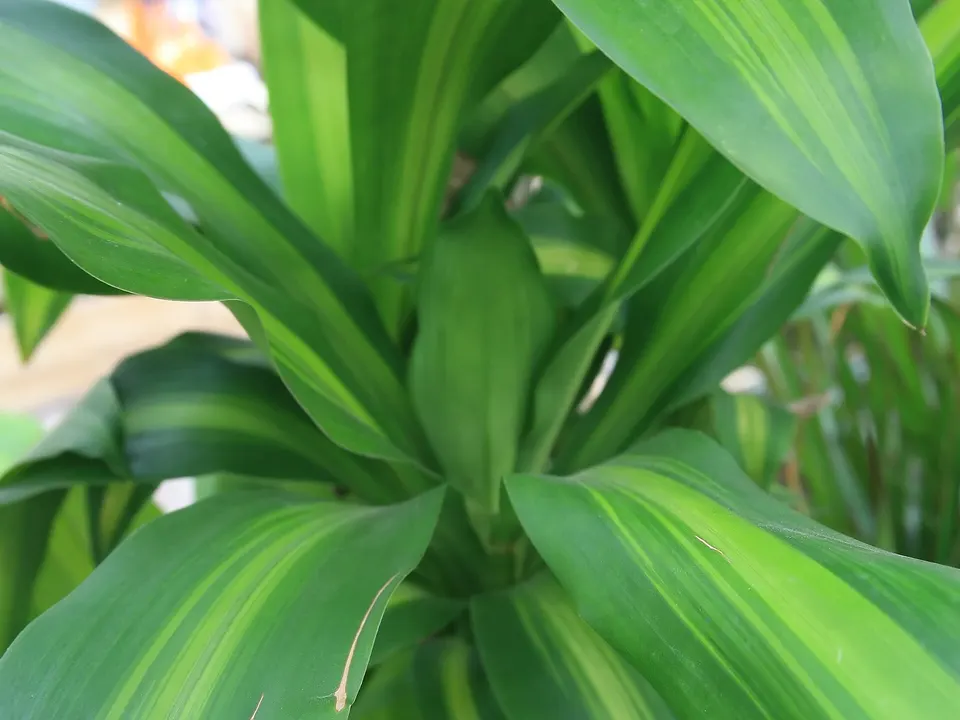
Dracaena care at a glance
| Light | Bright, indirect light; tolerates lower light |
|---|---|
| Watering | When the surface is dry; never stand in water |
| Soil and fluoride | Standard mix; avoid lots of perlite |
| Humidity | Mist if home humidity drops below 30–40% |
| Temperature | 60–70 °F days, about 10 °F cooler at night |
| Feeding | Monthly in spring and summer; no superphosphate |
| Cutting back tall stems | Cut bare stems at any height; new leaves follow |
| Propagation | Cuttings, air layering or basal shoots |
| Size | 2–10 feet, depending on the type |
| Pets | Yes: toxic to cats and dogs |
Light
- Most grow best in bright, indirect light, but many also tolerate lower light. [1, 2]
Watering
- Guides differ: Clemson says let it dry slightly, watering when the soil surface is dry to the touch; Illinois Extension’s dragon tree page says keep the soil moist. [1, 2]
- Both agree: never let the pot sit in water. [1, 2]
- Avoid watering with cold water. [1]
Soil and fluoride
- A standard houseplant potting mix works. [1, 2]
- Dracaena is very sensitive to fluoride, which yellows leaf tips and edges. Avoid mixes with a lot of perlite, and keep the soil pH around 6.0–6.5. [1]
Humidity
- If indoor humidity falls below 30–40%, an occasional misting helps. [1]
- Dry tips and edges are usually a sign of low humidity. [1]
- Illinois Extension notes dragon tree does fine in low humidity. [2]
Temperature
- Normal house temperatures of 60–70 °F by day and about 10 °F cooler at night suit it. [1]
- Sudden temperature changes or drafts can make it drop many leaves at once. [1]
Feeding
- Feed with a liquid foliage-plant fertilizer once a month in spring and summer, or use time-release pellets. [1]
- Don’t use fertilizers containing superphosphate: the fluoride in them injures dracaena. [1]
Cutting back tall stems
- When stems get too long and bare, cut them off at the height you want; new leaves soon appear. [1, 2]
- Cut back dragon tree stems to make it branch. [1]
Propagation
- Propagate by air layering or tip or stem cuttings. [1, 2]
- You can also root the shoots that grow from the base, in spring or late summer. [1]
Size
- Dracaenas grow 2–10 feet tall depending on the cultivar; upright types rarely get wider than 2 feet. [1]
Is dracaena toxic to pets?
- The ASPCA lists dracaena, including corn plant, as toxic to dogs and cats; corn plant is also toxic to horses. [3, 4]
- The toxic compounds are saponins. [3, 4]
- Signs include vomiting (sometimes with blood), depression, loss of appetite, drooling and, in cats, dilated pupils. [3, 4]
Compare with other plants in our pet-safe houseplant checker.
Dracaena varieties
| Variety | What it looks like |
|---|---|
| Corn plant (D. fragrans 'Massangeana') | Glossy, arching leaves like sweet corn, with a wide yellow center stripe; 4–5 feet tall. [1] |
| Dragon tree (D. marginata) | Clusters of slender, arching leaves with narrow purple edges; up to 10 feet. [1] |
| Dragon tree 'Tricolor' | Narrow green leaves striped with cream and red. [1] |
| 'Janet Craig' (D. deremensis) | Wide, dark, glossy green leaves in graceful arches; can reach 10 feet. [1] |
| 'Warneckii' (D. deremensis) | White-striped leaves; about 4 feet tall. [1, 2] |
| Gold dust (D. godseffiana) | Leaves heavily speckled creamy yellow, fading to white; about 2½ feet. [1] |
| Pleomele (D. reflexa) | Flexible stems with short, dense leaf rosettes spiraling around them. [1] |
Common dracaena problems
| What you see | Usual cause |
|---|---|
| Yellow leaf tips and edges | Fluoride injury: perlite-heavy mix, superphosphate fertilizer or low soil pH. [1] |
| Dry, brown tips and edges | Low humidity. [1] |
| Many leaves dropping at once | A sudden temperature change or drafts. [1] |
| Root rot | A potting mix that doesn’t drain quickly. [1] |
| Pests | Scale insects and mites are the most common. [1] |
Not sure what's wrong? Use the plant doctor to match what you see to a cause.
Questions people ask
Is dracaena toxic to cats?
Yes. The ASPCA lists dracaena as toxic to cats and dogs. Its saponins can cause vomiting, drooling, loss of appetite and, in cats, dilated pupils. [3, 4]
Why are my dracaena’s leaf tips brown or yellow?
Dry brown tips usually mean low humidity. Yellow tips and edges often mean fluoride injury from a perlite-heavy mix, superphosphate fertilizer or acidic soil. [1]
What types of dracaena are there?
Popular ones include corn plant (‘Massangeana’), the purple-edged dragon tree (D. marginata), ‘Janet Craig’, ‘Warneckii’, gold dust dracaena and pleomele. See the table above. [1, 2]
How do I fix a tall, leggy dracaena?
Cut the bare stem off at the height you want; new leaves soon sprout below the cut. You can root the top as a cutting. [1, 2]
How much light does a dracaena need?
Bright, indirect light is best, though many dracaenas tolerate lower light. [1, 2]
Sources
Facts on this page were checked against these sources on November 6, 2026. The wording is our own.
- Dracaena (HGIC 1504). Clemson Cooperative Extension, Home & Garden Information Center. Published Mar 16, 1999.
- Dragon Tree. University of Illinois Extension, Houseplants.
- Toxic and Non-Toxic Plants: Dracaena. ASPCA Animal Poison Control Center.
- Toxic and Non-Toxic Plants: Corn Plant. ASPCA Animal Poison Control Center.
Spotted a mistake? Report an error and we'll check it against the sources and update the page.