Philodendron care: heartleaf, red-leaf and tree philodendrons
Short answer
Most philodendrons like indirect or curtain-filtered light and tolerate low light; heartleaf philodendron copes with very low light. Keep the soil moist but never soggy, aim for 75–85 °F by day and 65–70 °F at night, and feed regularly with a dilute houseplant fertilizer. Vining types can climb a moss- or bark-covered pole. All parts are toxic to pets and children if eaten.[1, 2, 3]
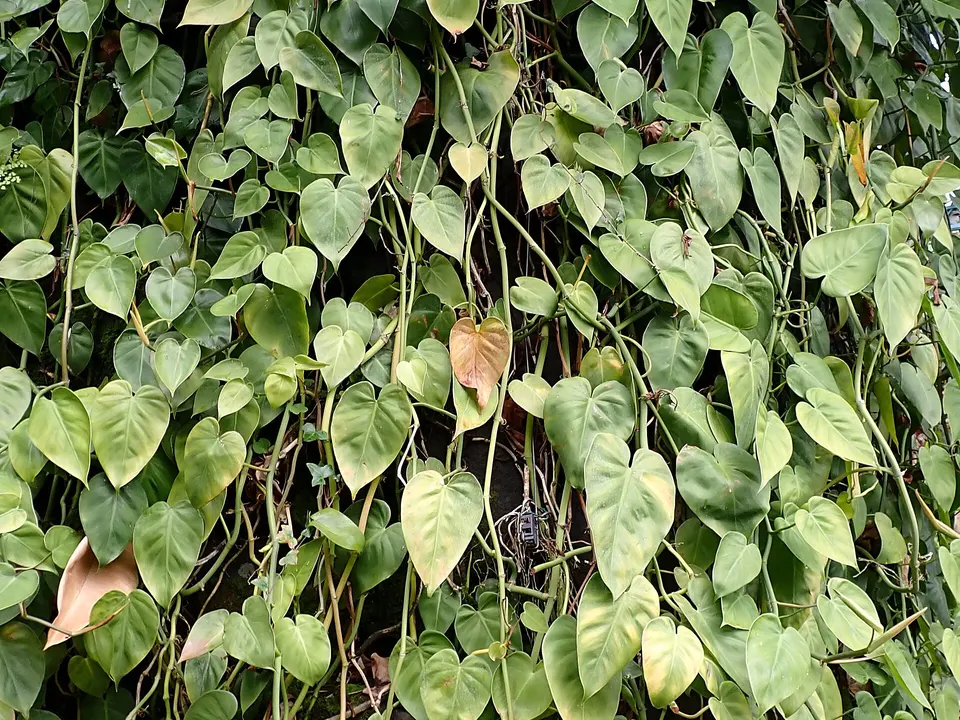
Philodendron care at a glance
| Light | Indirect light; tolerates low light |
|---|---|
| Watering | Moist but never soggy |
| Soil and pots | General-purpose potting soil that drains well |
| Humidity | Tolerates normal home humidity |
| Temperature | 75–85 °F days, 65–70 °F nights |
| Feeding | Regularly, at a dilute strength |
| Repotting | When crowded, any time of year |
| Vining or self-heading | Climbers trail or climb; self-headers form a clump |
| Propagation | Stem cuttings or air layering, any season |
| Pets | Yes: toxic to cats, dogs, horses and children |
Light
- Most prefer indirect or curtain-filtered sun and tolerate low light. Keep them out of direct sun. [1, 2]
- Heartleaf philodendron tolerates very low light; tree philodendrons grow best in medium to bright light. [1]
- Too little light, or overwatering, yellows the lower leaves and kills the growing tips. [1]
Watering
- Keep the soil moist but never soggy. Clemson says evenly moist; Illinois Extension says just minimally moist. [1, 2]
- Never let the pot stand in water. [1]
Soil and pots
- A regular, general-purpose potting soil works. [1, 2]
- Root rot usually comes from a mix that doesn’t drain quickly. [1]
Humidity
- High humidity is ideal, but philodendrons tolerate the low humidity of most homes. [1, 2]
Temperature
- Ideal is 75–85 °F by day and 65–70 °F at night. [1]
- Heartleaf philodendron likes 70–85 °F by day and 65–75 °F at night. [1]
Feeding
- Feed regularly with a dilute water-soluble houseplant fertilizer, or use a time-release fertilizer. [1]
- Too much fertilizer makes leaf tips curl and turn brown. [1]
Repotting
- Repot crowded plants at any time of year, using general-purpose potting soil. [1]
Vining or self-heading
- Most philodendrons are vining. Some are self-heading, sending out leaves from a heavy clump at the base. [1]
- Self-heading types can become very large, and their long leaf stalks are brittle. [1]
- Vining types grow only as tall as their support allows. Train them up a bark- or moss-covered board or pole, or let them trail from a hanging basket. [1]
Propagation
- Propagate at any time of year from stem cuttings or by air layering. [1, 2]
- Some philodendrons also produce offsets you can separate. [1]
Is philodendron toxic to pets?
- All parts are toxic if eaten: they contain calcium oxalate crystals. [1, 3]
- In cats and dogs, chewing it causes mouth irritation, pain and swelling of the mouth, tongue and lips, drooling, vomiting and difficulty swallowing. [3]
- Keep philodendrons away from pets and young children that might eat plants. [1]
Compare with other plants in our pet-safe houseplant checker.
Philodendron varieties
| Variety | What it looks like |
|---|---|
| Heartleaf (P. hederaceum, also listed as P. scandens) | 2–4 inch dark green, heart-shaped leaves on trailing stems. [1, 3] |
| Heartleaf 'Aureum' | Bright chartreuse leaves on a sturdy plant. [1] |
| Velvet (P. scandens f. micans) | Velvety heart-shaped leaves, usually bronze with reddish-brown undersides. [1] |
| Red-leaf (P. erubescens) | Dark green leaves that are red to copper underneath. [1] |
| 'Black Cardinal' | New leaves come up bright burgundy-red and age to nearly black. [1] |
| 'Prince of Orange' | Bright orange new leaves on a compact plant. [1] |
| Tree philodendron (P. bipinnatifidum) | Large, dark green leaves with deep, irregular slits; can reach 6 feet tall and wide. [1] |
| 'Xanadu' | Dense and low, with deeply cut leaves; about 3 feet tall and 5 feet wide. [1] |
| Elephant's ear (P. domesticum) | Arrow-shaped leaves 18–24 inches long with wavy edges. [1] |
Common philodendron problems
| What you see | Usual cause |
|---|---|
| Yellow lower leaves, dying tips | Too little light, or overwatering. [1] |
| Curled, brown leaf tips | Too much fertilizer. [1] |
| Root rot | A potting mix that doesn’t drain quickly. [1] |
| Broken leaf stalks | The long leaf stalks of self-heading types are brittle. [1] |
| Pests | Aphids, mealybugs, scale and spider mites. [1] |
Not sure what's wrong? Use the plant doctor to match what you see to a cause.
Questions people ask
Can philodendron grow in low light?
Yes. Most tolerate low light, and heartleaf philodendron copes with very low light. Too little light can yellow the lower leaves, though. [1]
Is philodendron toxic to cats and dogs?
Yes. Its calcium oxalate crystals cause mouth pain and swelling, drooling, vomiting and trouble swallowing in cats and dogs. [1, 3]
Why are my philodendron’s lower leaves turning yellow?
Usually too little light or too much water. Move it to brighter, indirect light and keep the soil moist but never soggy. [1]
What potting soil is best for philodendron?
A regular, general-purpose potting soil that drains quickly. Slow-draining mixes lead to root rot. [1, 2]
What is a red philodendron?
Usually a red-leaf philodendron (P. erubescens) or one of its cultivars, such as ‘Black Cardinal’, whose new leaves are burgundy-red, or ‘Prince of Orange’, with orange new leaves. [1]
Sources
Facts on this page were checked against these sources on November 6, 2026. The wording is our own.
- Philodendron (HGIC 1509). Clemson Cooperative Extension, Home & Garden Information Center. Revised Jan 15, 2016.
- Philodendron. University of Illinois Extension, Houseplants.
- Toxic and Non-Toxic Plants: Heartleaf Philodendron. ASPCA Animal Poison Control Center.
Spotted a mistake? Report an error and we'll check it against the sources and update the page.