Why are my plant leaves turning yellow?
Short answer
Overwatering is the most common reason plant leaves turn yellow, especially on houseplants: soggy soil damages the roots, and the lower and inner leaves yellow first. Where the yellow appears tells you the rest. Older, lower leaves yellowing point to a nitrogen shortage or a plant kept too dry. New leaves yellow between green veins point to iron chlorosis, common in alkaline garden soil. Fine pale speckles suggest spider mites. Check the soil and roots first, then the pattern.
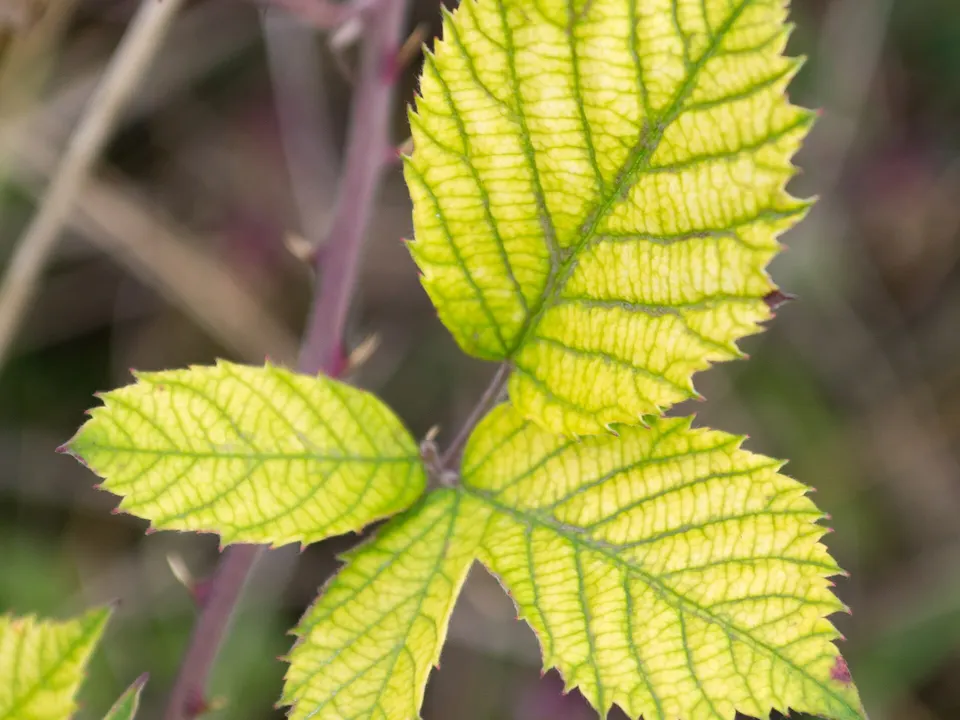
Quick check: what do you see?
Start with the row that matches your plant best, then jump to that cause for how to confirm it and fix it.
| What you see | Most likely cause |
|---|---|
| Lower and inner leaves yellow; the soil is wet or the pot feels heavy | Overwatering or poor drainage Most common |
| Lower leaves yellow and brown; the soil is dry and the pot feels light | Too little water |
| Older, lower leaves yellow first; the plant is crowded in its pot or hasn’t been fed | Nitrogen shortage or a crowded pot |
| Newest leaves yellow between green veins; garden plant in alkaline soil | Iron chlorosis (alkaline soil) |
| Yellow between the veins, starting on older, inner leaves | Manganese, zinc or magnesium shortage |
| Whole plant pale, with stretched, leggy new growth | Too little light (or too much sun) |
| Fine pale speckles, webbing, sticky leaves or tiny insects | Spider mites and other sap-feeding pests |
| Yellowing started soon after you moved or bought the plant | Stress after a move |
Compare the symptoms
Illustrations, not photos: drawn to show the typical pattern of each cause. Free to reuse.
- Overwatering or poor drainage
- Too little water
- Nitrogen shortage or a crowded pot
- Iron chlorosis (alkaline soil)
- Manganese, zinc or magnesium shortage
- Too little light (or too much sun)
- Spider mites and other sap-feeding pests
- Stress after a move
The 8 causes, and how to fix each
1. Overwatering or poor drainage
Most commonSigns
- The lower and inner leaves turn yellow first, and the plant may wilt even though the soil is wet.
- If it goes on, leaves scorch and drop, and the plant can die. Yellow leaves may turn brown.
- Outdoors, wet, compacted or poorly drained soil causes yellowing too.
How to confirm
- Lift the pot. If it is still heavy since the last watering, the soil is wet.
- In a big pot, push a wooden stick to the bottom: moist soil sticks to it or darkens it.
- Slide the plant out of its pot. Healthy roots are generally white; dark brown to black roots mean it has been overwatered. Soft, dark roots mean root rot.
How to fix it
- Stop watering until the soil is quite dry, then start a new, less frequent schedule.
- Pour off any water that collects in the saucer.
- After two weeks, feed with a water-soluble houseplant fertilizer. If the plant hasn’t improved two weeks after that, repot it in fresh potting mix.
- If most roots are dark, soft and dead, the plant is unlikely to recover.
- Outdoors, water less, improve drainage and loosen compacted soil around the plant.
Based on: University of Maryland Extension [2], University of Maryland Extension [1], University of Illinois Extension [3], Clemson Cooperative Extension [4], Utah State University Extension [8], University of Illinois Extension [5]
2. Too little water
CommonSigns
- Lower leaves turn yellow, then brown, and die when the plant stays too dry for too long.
- A thirsty plant wilts and yellows much like an overwatered one, so check the soil before you water.
How to confirm
- The pot feels light and the soil is dry.
- Roots that are rusty orange to light brown point to underwatering.
How to fix it
- Water thoroughly, until water runs out of the bottom of the pot.
- If the soil has shrunk away from the sides of the pot, it may take several waterings to wet it again.
- Check the soil more often and adjust your watering schedule.
Based on: Clemson Cooperative Extension [4], University of Maryland Extension [2], University of Illinois Extension [3]
3. Nitrogen shortage or a crowded pot
CommonSigns
- Older, lower leaves turn yellow first.
- Plants that have filled their pot with roots (root-bound) are the most likely to run short.
How to confirm
- Rule out watering problems first by checking the soil and roots.
- Look for roots circling the pot or growing out of the drainage holes.
- For garden plants, a soil test shows which nutrients are short.
How to fix it
- Houseplants: feed with a water-soluble fertilizer made for houseplants, as the label directs. Feeding needs differ between species, so check what your plant needs.
- Repot a root-bound plant into a larger container.
- Garden plants: have the soil tested and fertilize based on the results.
Based on: Washington State University Extension [6], Clemson Cooperative Extension [4], University of Illinois Extension [3]
4. Iron chlorosis (alkaline soil)
CommonSigns
- The newest leaves turn pale or yellow between the veins, while the veins stay green. It spreads to older leaves later.
- In bad cases, whole leaves turn yellow or white, edges brown, and branches can die back.
- It may affect only one branch or half of a tree or shrub.
How to confirm
- Have the soil tested for pH. Iron chlorosis is common in alkaline soil with lime (pH above 7.0), and iron gets harder for plants to take up above about pH 6.5.
- Rule out overwatering, pests, disease and weedkiller damage first.
- Soil next to concrete or old construction debris can be more alkaline, because lime leaches out of concrete.
How to fix it
- Fix wet or compacted soil first: water less, improve drainage, and loosen compacted ground.
- For a quick fix, spray the leaves with chelated iron. It works within days but only on the leaves that are there, so it needs repeating.
- For a longer fix in alkaline soil, use a soil-applied iron chelate containing FeEDDHA. Utah State says other chelates don’t work well above pH 7.2.
- When you plant, choose plants that tolerate alkaline soil.
- Rusty nails or iron filings in the soil don’t fix it.
Based on: Washington State University Extension [6], University of Illinois Extension [5], Utah State University Extension [7], Utah State University Extension [8]
5. Manganese, zinc or magnesium shortage
Less commonSigns
- Yellowing between the veins that starts on the inner, older leaves and moves outward points to manganese or zinc rather than iron.
- A magnesium shortage also yellows the leaf between the veins.
- Plants in high-pH soil can run short of manganese as well as iron.
How to confirm
- A soil test for pH and nutrients tells these shortages apart from iron chlorosis.
How to fix it
- Fertilize based on the soil test results.
- Fix drainage and compaction, and pick plants suited to your soil.
Based on: University of Illinois Extension [5], Washington State University Extension [6], Utah State University Extension [7], Utah State University Extension [8]
6. Too little light (or too much sun)
CommonSigns
- Too little light: the whole plant turns pale or yellow, and new growth is stretched and leggy as it reaches for light.
- Too much sun: spots appear on the leaves.
How to confirm
- Look at where the plant sits. Both very low light and very strong sun cause trouble for houseplants.
How to fix it
- Move a pale, stretched plant to a brighter spot.
- If new spots keep appearing in strong sun, move the plant to less sun.
Based on: University of Maryland Extension [1], Clemson Cooperative Extension [4], University of Illinois Extension [3]
7. Spider mites and other sap-feeding pests
Less commonSigns
- Spider mites: fine, pale speckling on the leaves and a faded look, later yellowing; fine webbing when there are many.
- Mealybugs look like white, cottony clumps where leaves meet stems; scale looks like small bumps on stems and leaves, which may be sticky.
How to confirm
- Check the undersides of leaves and the joints where leaves meet stems. Spider mites are too small to see clearly without a magnifying lens.
How to fix it
- Use only pesticides labeled for indoor use on houseplants, and follow the label.
- Spider mites: keep the plant healthy, and treat with insecticidal soap or horticultural oil.
- Aphids: wash them off with water, or use insecticidal soap.
- Mealybugs: wipe them off with a cotton swab dipped in rubbing alcohol.
- Scale: a heavily infested plant is best thrown away.
Based on: Clemson Cooperative Extension [4], Clemson Cooperative Extension [9], University of Illinois Extension [3]
8. Stress after a move
Less commonSigns
- Leaves yellow or drop after the plant moves: from the store to your home, from a room to the porch, or to a different window.
How to confirm
- The yellowing started soon after the move, and the soil and roots look fine.
How to fix it
- Give the plant a few weeks in good conditions to adjust.
- If the yellowing goes on for more than a few weeks, move it to another spot and change its watering slightly.
Based on: University of Illinois Extension [3]
Yellow leaves on a specific plant
Each plant has its own common causes. If yours is listed, its guide goes into more detail.
Look-alikes: what it might not be
One old leaf yellowing can be normal
Some plants shed their oldest leaves as they grow. Pothos drops old leaves, so most of its leaves end up near the vine tips, and the oldest leaf on a moth orchid yellowing is normal. One old leaf at a time is not a problem; many leaves at once, or new leaves, is. [10, 11]
Some plants are meant to be yellow
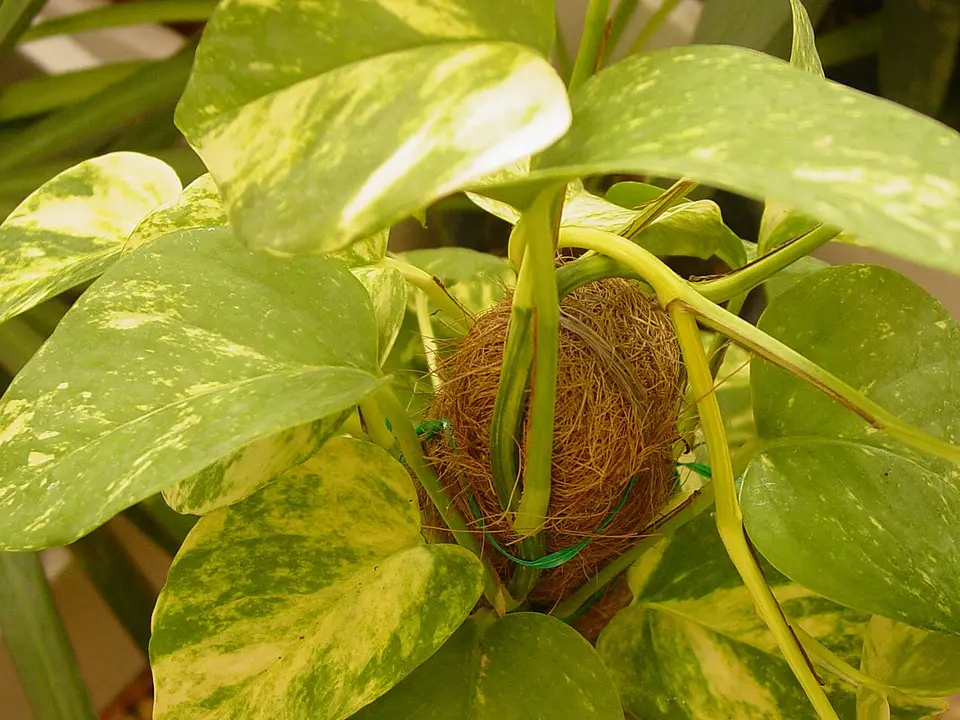
Some plants have yellow or yellow-green leaves on purpose. ‘Neon’ pothos has all-yellow leaves, and golden pothos is streaked with yellow. Firm leaves with a steady pattern are normal coloring, not a problem. [10]

How to prevent it
- Water when the plant needs it, not on a fixed schedule: check the soil or lift the pot first.
- Water thoroughly, then pour off any water left in the saucer.
- Feed houseplants as their species needs, and repot them when they outgrow the pot.
- Give each plant the light it needs: neither a dim corner nor harsh sun for plants that dislike it.
- Before planting outdoors, test the soil pH and choose plants suited to it.
- Avoid compacting the soil around plants, and fix drainage in wet spots.
- Look under leaves for pests now and then.
Questions people ask
Why are the bottom leaves of my plant turning yellow?
The lower and inner leaves are the first to yellow when the soil stays too wet. Lower leaves also yellow when a plant runs short of nitrogen, especially in a crowded pot, or stays too dry for too long. On some plants, one old bottom leaf yellowing now and then is normal. [2, 4, 6, 10]
Why are the new leaves on my plant turning yellow?
New leaves turning yellow between green veins is the classic sign of iron chlorosis. It is usually caused by alkaline soil that locks up iron, rather than too little iron in the soil. A soil test for pH confirms it. [6, 5, 7]
Why are my indoor plant’s leaves turning yellow?
Overwatering is the number one reason. Check the soil and roots first. Then think about light (too little or very strong sun), whether the plant needs feeding or a bigger pot, and whether you moved it recently. [1, 2, 3]
Why are my outdoor plant’s leaves turning yellow?
Look at the soil. Wet, compacted or poorly drained soil, damaged roots and alkaline soil all cause yellowing. New leaves yellow between green veins point to iron chlorosis in high-pH soil. A soil test for pH and nutrients is the best place to start. [5, 7, 6]
What causes yellow spots on plant leaves?
Fine, pale speckles all over the leaf usually mean spider mites. Small brown spots with yellowish edges can be a fungal leaf spot, and water-soaked spots with a yellow halo a bacterial one. Strong sun can also leave spots. [9, 4, 3]
Sources
Facts on this page were checked against these sources on November 10, 2026. The wording and illustrations are our own.
- Yellowing Leaves on Indoor Plants. University of Maryland Extension. Updated Mar 13, 2023.
- Overwatered Indoor Plants. University of Maryland Extension. Updated Mar 13, 2023.
- Keep houseplants happy with simple solutions. University of Illinois Extension. Feb 22, 2021.
- Houseplant Diseases & Disorders (HGIC 2251). Clemson Cooperative Extension, Home & Garden Information Center. Updated Feb 28, 2025.
- Chlorosis. University of Illinois Extension, Plant Problems.
- Common Cultural: Nutrient deficiency. Washington State University Extension, Hortsense. Last reviewed Mar 26, 2026.
- What is Iron Chlorosis and What Causes it?. Utah State University Extension, Forestry.
- Preventing and Treating Iron Chlorosis in Trees and Shrubs. Utah State University Extension, Forestry.
- Common Houseplant Insects & Related Pests (HGIC 2252). Clemson Cooperative Extension, Home & Garden Information Center. Updated Sep 10, 2021.
- Pothos, Epipremnum aureum. University of Wisconsin–Madison Division of Extension, Wisconsin Horticulture.
- Q&A: What causes orchid leaves to turn yellow and shrivel?. University of Maryland Extension, Maryland Grows.
Spotted a mistake? Report an error and we'll check it against the sources and update the page.