Parlor palm care: light, soil, feeding and repotting
Short answer
Parlor palms do best in bright, indirect light, such as near a north- or east-facing window, but tolerate low light. Plant them in a humus-rich, well-drained houseplant mix and let it dry slightly between waterings: overwatering is the most common problem. Feed now and then in the growing season, never in winter, and repot only every other year or so. The ASPCA lists it as non-toxic to cats and dogs.[1, 3]
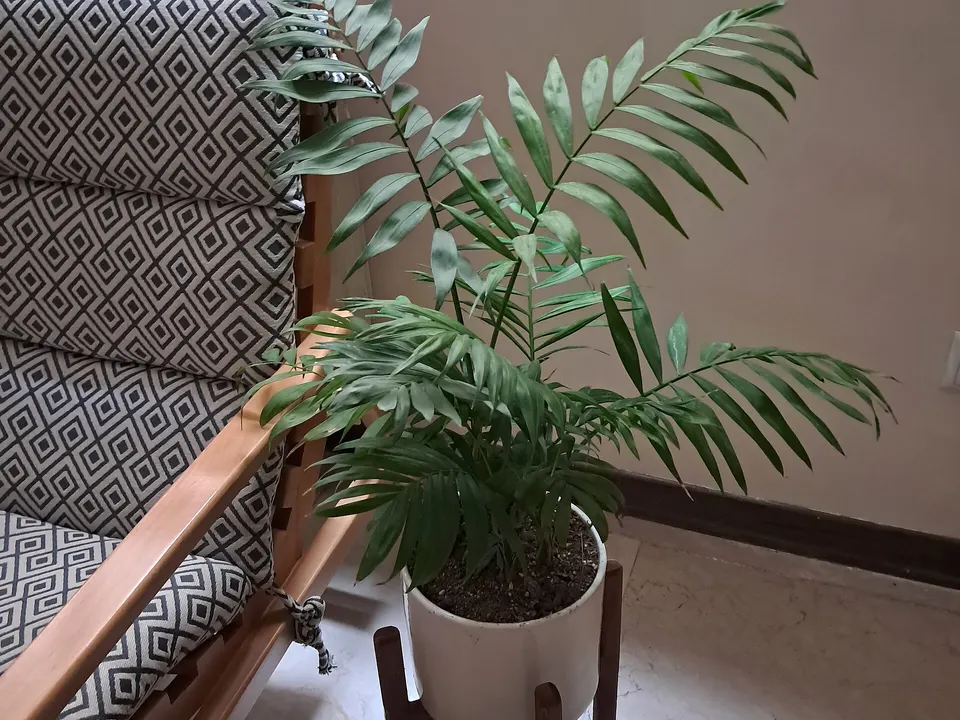
Parlor palm care at a glance
| Light requirements | Bright, indirect light; tolerates low light |
|---|---|
| Watering | Let the soil dry slightly between waterings |
| Soil for a parlor palm | Humus-rich, well-drained houseplant mix |
| Humidity | Low to medium is fine |
| Temperature | Indoor warmth; no cold drafts; no frost |
| Fertilizer | Now and then in the growing season; none in winter |
| Repotting | Only when needed, about every other year |
| Size and growth | Slow-growing; up to about 5 feet indoors |
| Pets | Non-toxic to cats and dogs |
Light requirements
- Give it bright, indirect light, ideally near a north- or east-facing window. [1]
- It tolerates low light. [1]
Watering
- Overwatering is a common problem: let the soil dry slightly between waterings. [1]
- It survives short dry spells, but grows more lushly in evenly moist soil. [1]
Soil for a parlor palm
- Use a humus-rich houseplant or container mix that drains well. [1]
Humidity
- Low to medium humidity suits it, so ordinary indoor air is fine. [1]
Temperature
- Keep it away from cold drafts from windows, doors and vents. [1]
- Outdoors it is only hardy in the warmest parts of the U.S. (zones 10–12). [1]
Fertilizer
- Fertilize now and then during the growing season, and not at all in winter. [1]
Repotting
- Repot only when necessary; every other year is generally enough. [1]
- Signs it needs it: roots coming out of the drainage holes or across the soil, a pot full of roots, or wilting between normal waterings. [2]
- Repot in spring or early summer, at the same depth, in fresh potting mix, and water right away. [2]
Size and growth
- It grows slowly. Indoors the stems can reach 5 feet but usually stay smaller. [1]
- Growers often plant three or more in one pot. Over time some stems get crowded out and die; that is normal. [1]
- After a few years it may produce small yellow to orange-red flowers on branched stalks. [1]
Is a parlor palm safe for cats and dogs?
- The ASPCA lists the parlor palm as non-toxic to dogs and cats. [3]
- For people, the juice of its fruit can irritate sensitive skin. Indoor plants rarely fruit. [1]
Compare with other plants in our pet-safe houseplant checker.
Parlor palm varieties
| Variety | What it looks like |
|---|---|
| 'Variegata' | Green fronds streaked with white; rarely seen. [1] |
Common parlor palm problems
| What you see | Usual cause |
|---|---|
| Soil staying wet; rotting roots | Overwatering. Let the soil dry slightly between waterings. [1] |
| Fine speckles or webbing; white cottony clumps | Spider mites or mealybugs. Misting and wiping the leaves with a damp cloth helps prevent and remove them. [1] |
| A few stems dying in a crowded pot | Normal: some stems get crowded out over time. [1] |
Not sure what's wrong? Use the plant doctor to match what you see to a cause.
Questions people ask
How much light does a parlor palm need?
Bright, indirect light is best, such as near a north- or east-facing window. It also tolerates low light. [1]
What fertilizer does a parlor palm need?
Very little: feed it now and then during the growing season, and stop in winter. [1]
How often should I repot a parlor palm?
Only when it needs it, generally every other year. Repot in spring or early summer, into fresh mix at the same depth. [1, 2]
Is a parlor palm safe for pets?
Yes. The ASPCA lists it as non-toxic to cats and dogs. [3]
Sources
Facts on this page were checked against these sources on November 10, 2026. The wording is our own.
- Chamaedorea elegans (Parlor Palm). NC State Extension, Gardener Plant Toolbox.
- Repotting. University of Illinois Extension, Houseplants.
- Toxic and Non-Toxic Plants: Parlor Palm. ASPCA Animal Poison Control Center.
Spotted a mistake? Report an error and we'll check it against the sources and update the page.