Orchid care: keeping a moth orchid healthy and blooming
Short answer
Moth orchids (Phalaenopsis) like bright, indirect light from an east window. In bark, give them a thorough soak about once a week and let them drain completely. Keep them at 60–85 °F, feed lightly while they’re growing, repot every one to three years before the bark breaks down, and cut the old flower spike back to encourage new blooms. They’re non-toxic to cats and dogs.[1, 2, 3, 4]
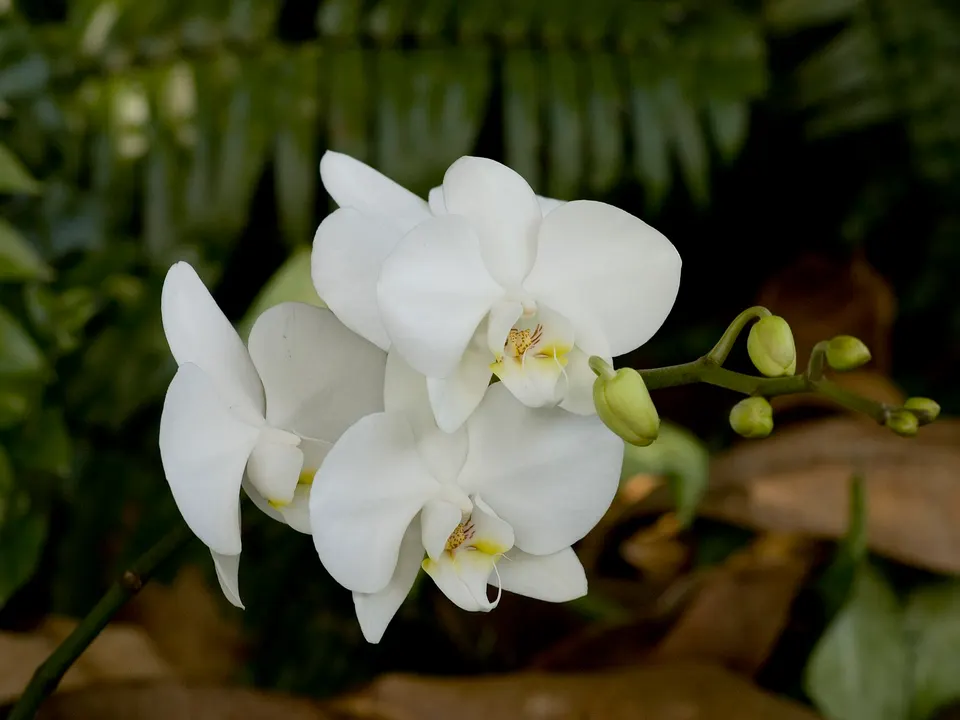
Orchid care at a glance
| Light | Bright, indirect light, ideally an east window |
|---|---|
| Watering | About once a week in bark; less in winter |
| Potting mix and pots | Orchid bark mix, in a pot with excellent drainage |
| Humidity | A pebble tray helps; never flood it |
| Temperature | 60–85 °F |
| Feeding | Lightly, while growing; skip winter |
| Repotting | Every 1–3 years, before the bark breaks down |
| Getting it to bloom again | Good light, cool fall nights, and trim the old spike |
| Air roots | Roots above the pot are normal |
| Are orchids toxic to pets? | Moth orchids are non-toxic to cats and dogs |
Light
- Give it indirect light, ideally from an east-facing window; a west window also works. [1, 2]
- In winter it can move into direct light or a south window. [1]
- Read the leaves: light green means the light is right, dark green and stiff means too little, and pink or reddish edges mean too much. [1]
- In winter, don’t let the leaves touch cold window glass: it damages them. [2]
Watering
- In bark, watering about once a week is usually enough; in moss, water when the top feels dry. Water less in winter. [1, 2]
- Water at the sink: run lukewarm water through the pot for a minute or so, then let it drain completely before it goes back on its saucer. [1, 2]
- Lift the pot first: if it still feels heavy, it doesn’t need water yet. [2]
- Roots above the pot turn from silvery white to pale green when they’ve had enough water. [1]
- Misting alone doesn’t give an orchid enough moisture. [1]
Potting mix and pots
- Use a commercial orchid bark mix in a pot with excellent drainage. [1, 3]
- Bark holds less water than moss. Sphagnum moss isn’t a good long-term mix and can cause root rot if kept wet. [2, 3]
- Choose a pot just big enough for the roots: a pot that’s too large holds too much moisture. [3]
Humidity
- A pebble tray under the pot raises the humidity around it. Don’t flood the tray, or the roots stay too wet. [1]
- Low humidity combined with too little water causes wrinkled leaves. [1]
Temperature
- Keep it between about 60 °F and 85 °F. [2]
- Cooler night temperatures in fall help it set new flower spikes. [1]
- If it spends summer outdoors, wait until nights are above 55 °F, and bring it in when evenings dip into the 50s. [1, 2]
Feeding
- Feed lightly while it’s growing or flowering. University of Maryland suggests an orchid fertilizer at label strength every third or fourth watering; Clemson suggests a balanced orchid fertilizer (such as 10-10-10) from mid-spring to early fall. [1, 2]
- Skip feeding in the cooler, darker winter months. [1]
- Overfeeding gives lush leaves at the expense of flowers. [1]
Repotting
- Repot every one to three years, before the bark breaks down into fine, mulch-like bits that hold too much water. [1, 2, 3]
- Never repot while it’s in bloom. [2]
- Guides differ on timing: Clemson suggests shortly after flowering, or late winter to early spring once new roots appear; University of Maryland suggests whenever new growth starts. [1, 2, 3]
- Trim off dead or damaged roots with sterile snips. Healthy roots are white with green tips. [1, 3]
- If roots are stuck to the old pot, soak them until they come free without breaking. [1]
Getting it to bloom again
- The most common reason an orchid won’t flower is too little light. [1]
- When the flowers fade, cut a yellowed or brown spike back to about ½ inch above the second node and watch for new buds. [1]
- Or cut the spike down to the leaves; the plant usually produces a strong new spike within a year. [2]
Air roots
- Many of its roots grow above the pot. That’s normal: don’t cut them off. [1]
Are orchids toxic to pets?
- The ASPCA lists Phalaenopsis (moth) orchids as non-toxic to dogs, cats and horses. [4]
Compare with other plants in our pet-safe houseplant checker.
Common orchid problems
| What you see | Usual cause |
|---|---|
| Wrinkled leaves | Low humidity combined with too little water. [1] |
| Rotting roots | Mix kept too wet: sphagnum moss, a flooded pebble tray or old, broken-down bark. [1, 3] |
| Dark green, stiff leaves | Too little light. [1] |
| Pink or reddish leaf edges | Too much light. [1] |
| Damaged leaves in winter | Leaves touching cold window glass. [2] |
| No new flowers | Usually too little light. [1] |
Not sure what's wrong? Use the plant doctor to match what you see to a cause.
Questions people ask
How often should I water an orchid?
In bark, about once a week; in moss, when the top feels dry. Soak it thoroughly, let it drain completely, and water less in winter. [1, 2]
How do I get my orchid to bloom again?
Give it enough light, let it have cooler nights in fall, and cut the faded spike back to about ½ inch above the second node, or down to the leaves for a strong new spike within a year. [1, 2]
When should I repot my orchid?
Every one to three years, before the bark breaks down, and never while it’s blooming. Late winter or early spring, when new roots appear, works well. [1, 2, 3]
Are orchids toxic to cats?
Moth orchids (Phalaenopsis) aren’t: the ASPCA lists them as non-toxic to cats, dogs and horses. [4]
Should I cut off orchid air roots?
No. Roots growing above the pot are normal for moth orchids, so leave them on. [1]
Sources
Facts on this page were checked against these sources on November 6, 2026. The wording is our own.
- Care of Phalaenopsis Orchids (Moth Orchids). University of Maryland Extension. Updated Mar 13, 2023.
- General Care for Phalaenopsis Orchids. Clemson Cooperative Extension, Home & Garden Information Center. Feb 13, 2020.
- Repotting Your Orchid. Clemson Cooperative Extension, Home & Garden Information Center. Mar 9, 2023.
- Toxic and Non-Toxic Plants: Phalaenopsis Orchid. ASPCA Animal Poison Control Center.
Spotted a mistake? Report an error and we'll check it against the sources and update the page.